Short layovers, confusing terminals, and lost bags are common worries. Connecting flights don’t burn a hole in your pocket and offer more travel options for you. If you are asking how do connecting flights work, this guide is the right place to start. We explain everything in clear, simple steps, so nothing feels confusing. You will learn how airlines plan connections, how much layover time you really need, and what happens to your luggage. We also share easy tips for staying calm if something goes wrong.
Read on; this guide explains how connections work and how to make them smooth.
What Is a Connecting Flight?
It means you take two or more flights to reach your ultimate destination. A trip with no change of planes is called a nonstop flight. If you change planes once or more, it is a connecting itinerary.
Most big airlines use a “hub and spoke” system. They fly passengers from smaller cities into a large hub airport. From there, passengers move on to other places. This lets airlines serve almost any route with just one stop.
Here’s a quick comparison of the different trip types:
- Nonstop:
You fly straight to your destination. It is the fastest choice and often costs a bit more.
- Connecting:
You change planes at least once. It can save money or give you a short stop in another city.
- Multi-stop:
You make two or more stops. It takes longer, but it can be cheap and lets you see several cities.
Difference Between Layover, Connection and Stopover
These words are easy to mix up:
- Layover:
The waiting time at the connecting airport when you deplane and wait to board your next flight to your final destination.
- Connection:
This is when your journey isn’t direct, and you need to switch planes to reach your final stop.
- Stopover:
This refers to an extended layover of about 24 hours or more. It gives you plenty of time to take a break and even explore the area adjacent to the airport.
Two Types of Connections
Not all connections work the same way. There are two main kinds.
- Protected connections are booked on one ticket. The airline looks after you if something goes wrong. Your bags are usually sent to your final stop. If a delay makes you miss your next flight, the airline puts you on a new one.
- Self-transfer connections are booked separately, often with different airlines. You must manage each part of the trip on your own. You usually collect your baggage and check it in again. If you miss your next flight, you must buy a new ticket. These trips are often cheaper, but they are riskier.
How the Process Works
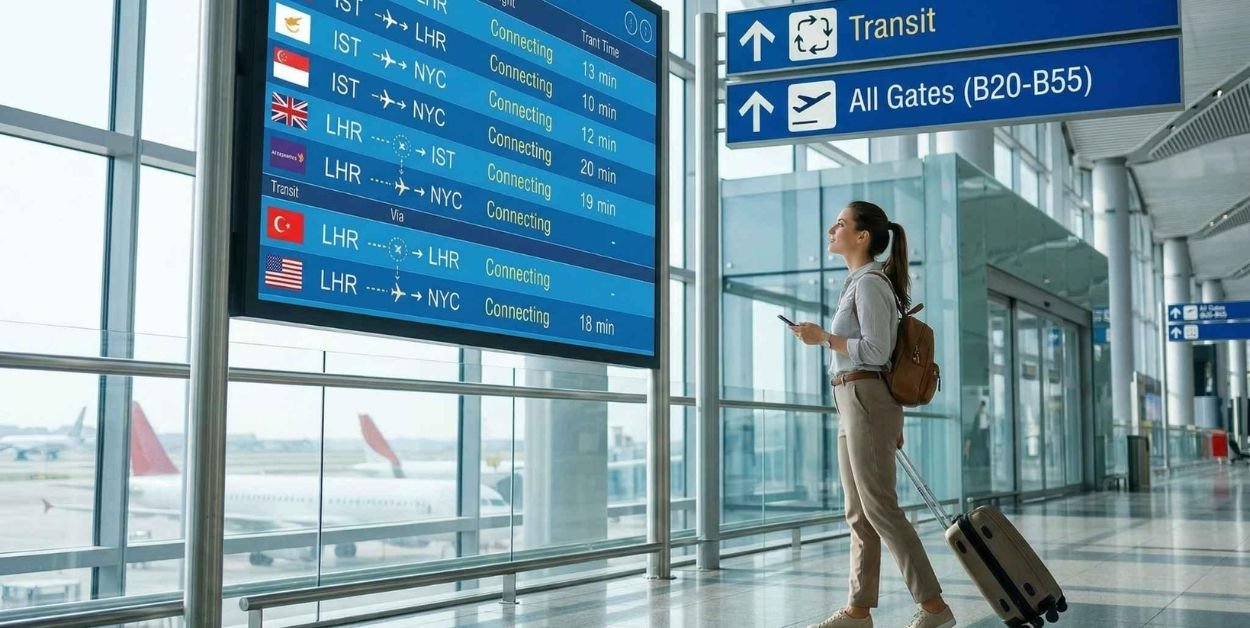
When you book one ticket, the check-in agent at your first airport usually gives you all your boarding passes. After you land, you follow the signs for “connections” or “transfers.” Then you head to your next gate.
Booking sites help you pick your trip. You can use the Stops filter to choose fewer stops or nothing at all. Each result shows how many stops the trip has. It also warns you if the trip will run into the next calendar day.
Minimum Connection Times:
Every airline sets a minimum connection time for each hub airport. This is the shortest time it believes you need to switch planes. When you book on one itinerary, the airline’s system builds this time in for you.
Some of these times are very short. A few are as less as 30 minutes. Domestic connections are often under 60 minutes. International ones are usually longer than an hour. When domestic and international flights use separate terminals, the transfer may take more than two hours.
If you miss your next flight on a single itinerary, the airline will book you on the next flight available, absolutely free of charge.
Do Not Trust the Minimum:
When wondering how connecting flights work, remember that short layovers are risky. A long walk between distant gates eats up minutes fast. You might barely make the plane, with no time for food or a bathroom break.
That is why many travelers add extra time on purpose. Here are some guides for how much to allow:
- U.S. domestic flights: 60-90 minutes (on average)
- International flights: At least two hours.
- Separate tickets: At least three hours, and four is even better.
Some travelers need even more time. This includes people with disabilities and families with small children. Busy travel days, such as holiday weekends, are also a good reason to add time. You should also think about the weather. Winter snow and summer storms can cause delays. Check whether the first flight is late as well. If so, leave extra room.
There is a limit on the other side as well. Airlines usually allow a maximum connection time of about four hours or more.
What Happens to Your Bags During a Connection?
How do checked bags work for connecting flights? You must know that your bags depend on your ticket type. With a single ticket, your bags are almost always checked till your final destination. There is one exception. Some countries, like the United States and Canada, may ask you to collect your bag and check it in again during your layover.
With separate tickets, you must pick up your bags. Then you take them to the new airline’s counter and check them in again. You may also need to go through security again. This takes a lot of time, so plan for it.
You can also travel with just a carry-on. This avoids lost or late bags. However, moving a bag past a large terminal can be exhausting. Pick the plan that suits you best.
What to Know About Security, Customs and Visas For a Connecting Flight?
Domestic transfers rarely need security checks unless you switch terminals, unlike international flights.
Some airports also make you leave security in one terminal and enter again in another. This can happen even on a valid partner airline ticket. Airlines should add this time to your trip.
Visas matter too. If you connect through another country, you might need a transit visa. You may need one even if you never leave the airport. The rules depend on your nationality and the country you pass through.
What If You Have Missed Your Connecting Flight?
Missed connections are common, and most happen because of delays. Make a note of these points mentioned below:
- Go to the gate or the airline desk and explain what happened.
- Ask for the next available flight to your destination.
- Ask about your bags. Find out whether they will be sent ahead or you must pick them up.
- Check any later plans, such as another flight, before you leave the airport.
If the delay would cause big trouble, ask for more help. For example, you might be trying to catch a cruise or reach a wedding. Some airlines will buy you a seat on a rival airline. This is not guaranteed, but it never hurts to ask.
Remember the difference between ticket types. On a single ticket, the airline will usually rebook you for free if a delay caused the problem. The airline may even provide monetary compensation, food vouchers, and accommodation depending on how late the flight is and your eligibility.
If you have separate tickets, the second airline may treat you as a NO-SHOW. It may cancel your seat and require you to purchase a new ticket. If the miss was your own mistake, you will likely pay too.
What Are the Benefits of Connecting Flights?
Connections have real benefits:
- They are often cheaper than nonstop flights. Airlines fill more seats by joining routes through hubs.
- They let you reach places that have no direct flights.
- They can turn into mini-trips if you have a long layover.
However, a nonstop flight can be more convenient in many ways. It reduces travel stress, lowers fatigue, and has a lower chance of baggage loss. So, the choice is yours.
Help for Travelers Who Need Assistance With Their Connecting Flights
If you need mobility or accessibility help, ask early. The best time is when you book your ticket. Airlines can provide staff to help you get to your gate, board, and collect your bags. In the U.S., the Air Carrier Access Act protects your right to this help.
Simple Ways to Manage Your Connection
Now you know how connecting flights work. Here are some simple ways to help you manage your connection-
- Choose a single ticket. It gives you the most protection if something goes wrong.
- Stick to one airline or alliance. Big hubs often place partner gates close together. Some also run shuttles or people-movers inside security.
- Avoid the day’s last flight. If you miss the last flight out of your hub, you may have to stay overnight. Early connections are better. If you miss one, you may have more flights to catch.
- Pick your hub with care. Some airports have more delays than others. In the U.S., some airports known for delays include those in the New York area, SFO, Boston Logan, and more. Sunbelt hubs usually do better. In Europe, London Heathrow, Paris, and Frankfurt often make the “avoid” list, especially if you have a connection. Many travelers prefer Amsterdam and Munich.
- Sit near the front. A seat close to the exit door can save 5 to 10 minutes when you get off the plane. This helps most on large planes.
- Find your gate first. Before you shop or eat, go to your next gate. This shows you how long the walk takes. Check that the flight number matches your ticket. Two flights with similar times can leave from the same area.
- Use apps. Airline apps show live gate changes, delays, and boarding times. Turn on notifications before you travel. Other apps can help as well. FlightStats tracks delays. WeatherBug checks the weather conditions at your hub. HotelTonight can help you find a place to stay if you get stuck overnight.
- Talk to the gate agent. If you land late, speak to an agent as you leave the plane. On domestic trips, they can tell you your next gate. If you still have to pass through border control, they can tell you whether to rebook now.
Explore our other blogs for more insights and updates.
Wrapping up!
This blog gives you an insight into how connecting flights work. If you are methodical and plan accordingly, it doesn’t have to be scary. All you should do is book one ticket when you can and leave extra time. Then pick your hub and seat carefully. Know your gate and keep your apps ready, and if something goes wrong, speak to the airline right away. Keep this write-up handy and enjoy your connecting flights!
FAQs:
Yes, you may book separate flights on different airlines to connect. Just remember to allow enough time between your flights, check the baggage policies, and double-check your terminals.
Most of the time, checked bags go all the way through so that you won’t clear customs on layovers. However, countries like the U.S. differ. Ask your check-in agent for details about your specific route.
Allow an hour or two for domestic flights and at least three hours for international layovers. Busy airports and self-transfers require extra time, so plan ahead for a hassle-free experience.
Check your boarding pass and the airline app to find your next gate. American Airlines will rebook you on the next available flight if you miss a connection because of an airline delay.
No, if your entire journey is booked under a single ticket or confirmation code, your check-in covers all legs of the trip.